
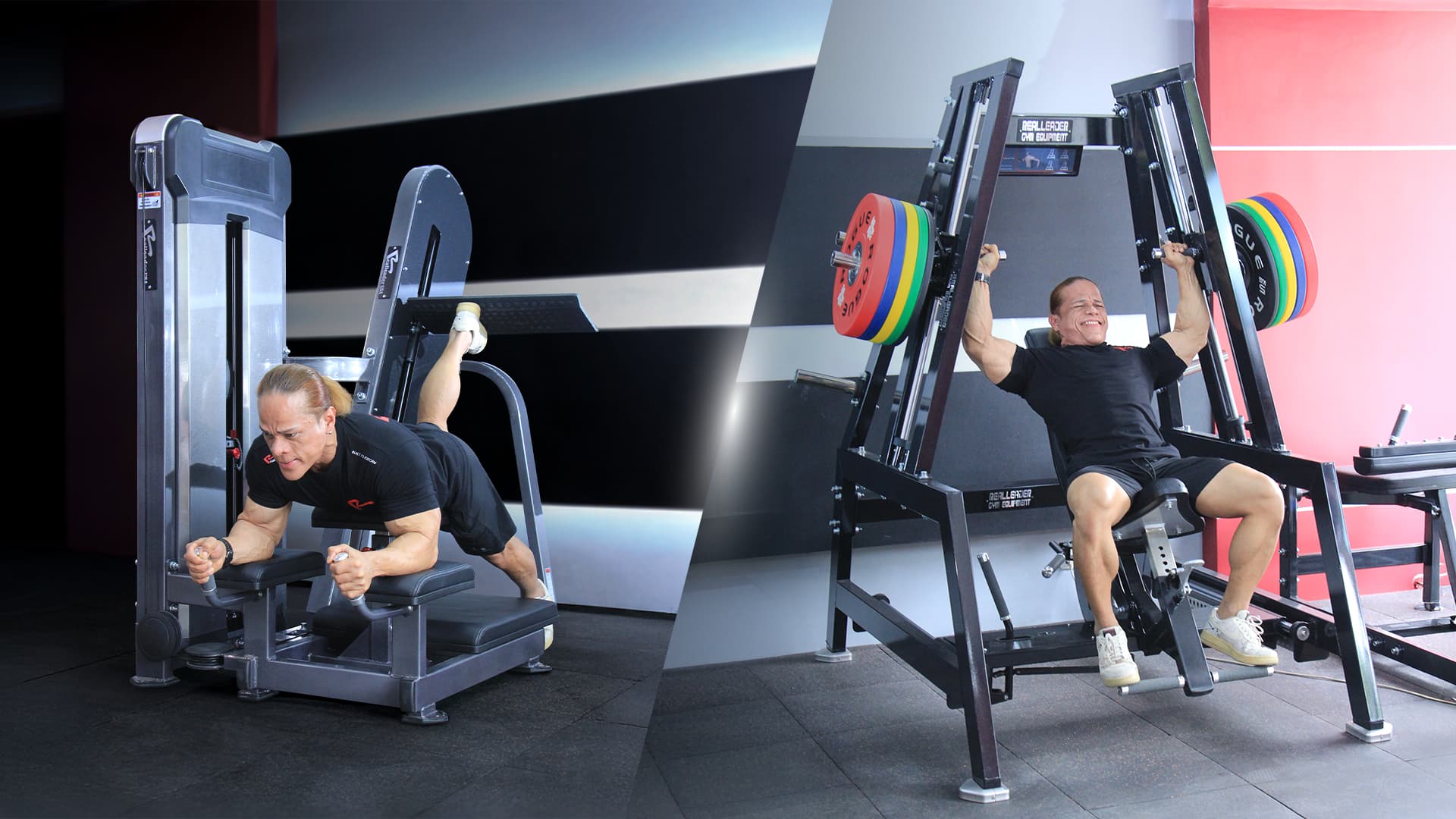
These two machine types are often treated as interchangeable. In practice they serve different needs, and a mature commercial gym usually carries both, in a ratio tuned to its member profile.
Pin loaded: fast, safe, easy to use
On a pin loaded machine the resistance is a stack of plates adjusted by moving a pin. Members change the load by shifting a single pin — no lifting plates at all.
- Load changes in seconds, ideal for circuits and busy hours
- Lower injury risk because there are no plates to lift and carry
- Approachable for new members who are still learning technique
- The load cannot be dropped, so it is safe to use without a spotter
The trade-off is that load increments follow the plate size — usually 5 kg. For smaller muscle groups that jump can feel too large, although many machines now include small add-on plates to work around it.
Plate loaded: heavier loads and a more natural feel
Plate loaded machines use olympic plates mounted manually on the load arms. Because each side is loaded separately, these machines handle far heavier loads and often feel closer to free weight movement.
- Much higher load capacity for advanced members
- Independent arms force both sides of the body to work equally
- Finer load progression, since small plates can be used
- Generally fewer moving parts, which keeps maintenance simple
The downside is that changing the load takes time and effort. Plates that are not returned to their racks also become a tidiness and safety problem, which has to be designed out with enough plate storage nearby.
How to decide the ratio
As a starting point: the larger your share of beginners and peak-hour members, the more pin loaded equipment you need. The more serious your member profile and the larger your strength area, the more sense a substantial plate loaded range makes.
Hotels, apartments, and corporate wellness facilities generally lean towards pin loaded because their users train unsupervised. Commercial gyms with a strong lifting community usually need a serious plate loaded area, or those members will train somewhere else.
The question is not which is better, but what ratio of the two best fits your members.